Showing posts with label chief tareha. Show all posts

Thursday, 11 March 2021

Walk up to Akeake Pa Site


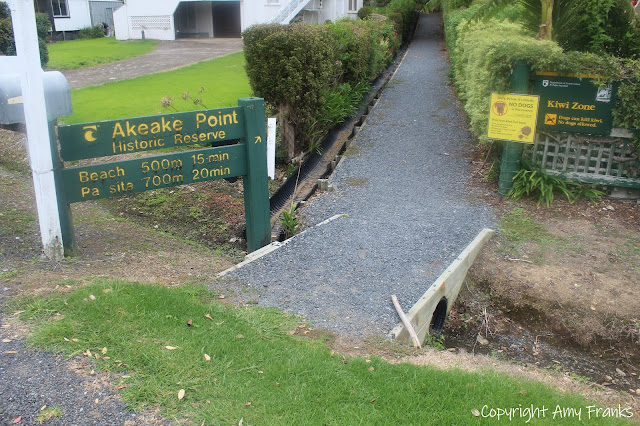
On Tuesday morning after B had gone to work I drove out to Opito Bay (our fishing launching spot for our boat) with the intention of exploring the nature walk there that leads to the Ake Ake Pa Site. Most nature walks managed by our Department of Conservation are dog free because of the kiwis that live in this area.


These are the first lot of steps at the start of the nature walk, weirdly enough it was at this spot I felt a sharp stabbing pain on the front of my ankle. I looked down, opened my sock and found a wasp hanging off my skin trying to sting me. After swiping it away the pain continued for another 15 minutes then gradually eased off - luckily I'm not allergic to insect stings.


This was looking back after the 2nd set of stairs - quite a nice even pathway uphill.


I was the only one there so it was so nice and peaceful even with the sound of Tuis singing away and the odd Fantail flitting around me curiously.


On my journey around the loop I counted about 6 possum traps all up. Possums here are not native, they were introduced through colonisation but now unfortunately they eat the native trees and plants so they are definitely not wanted.


At one pointed I saw this whiteboard leaning against a tree written by a Department of Conservation worker about some of the other traps that people had stolen.


After a 15 minute walk I reached the lookout point at the top of the Pa Site - amazing views looking out over the peninsula. The water is still still like a mirror - it would've a perfect day's fishing out there.


This part is the Tareha lookout point and offers views also over the Te Puna Inlet, Motupapa Island, Moturoa Island and the Kent Passage.


The original people of this Pa (maori village or defensive settlement) interacted with the earliest missionaries who sailed past on the way to the Kerikeri Mission Station (Store Store and Kemp House).


A chief named Tareha was an ally of Hongi Hika (who cut the flagpole down at Waitangi) gave his support to the local missionaries. He was well known for his bravery and skill in leading the warriors into battle.


He was also known for his huge size being a big man and large appetite. When missionary Samuel Marsden invited him on board his ship "Dromedary" there was not a large enough chair for him to sit in.


The first locality to attract the early whalers was the Te Puna area (near the river inlet), Chief Akeake would have contact with the traders through observation from the Pa.


Not much fungi up there but it's possibly the wrong time of year as we are in very early Autumn so maybe in a month or so there may be more.


Linking up with Timeless Thursdays and Skywatch Friday

Tuesday, 7 May 2019

Learning at Rewa's Village


One of our adventures recently have included visiting an attraction that is local to us called Rewa's Village. Now this place overlooks the Kerikeri Stone Store and Mission House and was designed to teach people about the Maori fishing village that used to be there before and when the first settlers arrived in NZ. Well known chiefs like Tareha of Ngati Rehia, Rewa of Ngai Tawake and Hongi Hika of Ngati Tautahi stayed here in the 1820s.


This is a storage area that the Maori use to store their food in such as vegetables, ferns, roots etc.


A Maori whare is what we call a house or sleeping area or a meeting house. You can see the small door and window at the front. There is a floor area inside that is basically the earth and they would've laid grass or mats down to sit and sleep on.


At the bottom of the hill is this wetland area. The tide was out so we were able to see the various plants that grew there such as Mangroves which are an important ecological food source for many fish and crustaceans such as Snapper, Crabs and Shrimps etc.


Along the many pathways were many medicinal plants that the Maori would've used to treat illnesses and eat for food such as Flax (Harakeke) was prepared and used as clothing or baskets, Kawakawa was used to treat cuts, wounds, bruises or for toothache, the bark of the Rata tree was soaked in water and then applied as a lotion. More information on the uses of these plants here.


This hut under the earth was another storage area - this one particular for Kumara or what you might call Sweet Potato which was a very important food staple. In fact it's still popular today, we like the orange variety as it is sweeter than the gold or purple.


Near the edge of the water was this fishing waka or canoe that would've fitted at least 2-3 people in. It's alot smaller than a traditional war canoe. To the Maori, Tangaroa is the God of the sea and of fish. It was important for them to be favoured by this God and because fishing was regarded as being Tapu (a sacred activity) they had rules about when to fish and how to make nets out of Flax.


This hut was for a Tohunga's enclosure. A Tohunga was sort of like a doctor who practiced alternative natural medicine and they were greatly respected.


More medicinal plants around this path including plaques explaining who the first botanists to our country were such as Joseph Banks and Dr Daniel Solander who came off Captain Cook's boat.

I'm particularly interested in natural medicine and I have grown various herbs for use in cooking and drinking so this appealed to me.

Linking up with Our World Tuesday and My Corner of the World.

New blog

 Please join me at my new blog which is at amypie71.blog. I'm still making a few tweaks to it here and there, please change your link fo...