Showing posts with label auckland history. Show all posts

Monday, 24 March 2025

Auckland's Ferry Building


Photo taken November 2024 on a rainy Spring day.

One of my favourite buildings in Auckland City especially also because I use to work on the 3rd floor in the late 1980s. A bit of history about it; 

It was designed by Alexander Wiseman and completed in 1912. It is a category 1 historic place that sits on the edge of Princess Wharf looking over the Hauraki Harbour. Construction began in 1909 and is made out of sandstone, brick and Coromandel Granite. Initially the building was home to the headquarters of the 2 main ferry operators in the harbour; the Devonport Steam Ferry Company and Takapuna Tramways Ferry Company. Later tenants of the building included trade unions and consulate offices. Between 1985 and 1988 (when I worked there) each floor was totally refurbished but still maintains the original features.

Photo taken the year before in Spring 2023

Linking up with Through my lensTuesday TreasuresMy corner of the worldWordless Wednesday

Monday, 25 November 2024

Fire Station 20


If you're a Kiwi you'll know this icon in Auckland City. It's the central fire station which sits at the top of Pitt Street. Many times over the years I've drive past this building and wondered about it's history. 

Apparently it first opened on July 3rd 1902. In 1933 officers were first issued with uniforms and in 1939 after WW2 started there was the start of proper procedures, emergency drills and lessons. These days it's a very busy station still in use while travelling throughout the city.

Linking up with Through my lensTuesday TreasuresMy corner of the world and Wordless Wednesday.


Monday, 11 November 2024

Park Drive


In Parnell, on the outskirts of Auckland is this character building named "Park Drive". From what I could see online, it has been split up into apartments and being rented in what is now a very affluent wealthy suburb.

Apparently the building use to be named the "Arthur Eady Building" who was a music publisher in Auckland and judging by the information I've found about him, he owned quite a few businesses and buildings. There was something about his name in the back of my mind until I realized that in the 1970s and 1980s there was a music store in The Strand, Auckland City named after his younger brother Lewis Eady.

From the Whanganui Chronicle, 14th January 1923

Linking up with Through my lensTuesday TreasuresMy corner of the world and Wordless Wednesday.

Saturday, 25 November 2023

Under the bridge


At the intersection of Fanshawe Street, Sturdee Street and Customs Street East in Auckland City is this overpass bridge which leads to the viaduct and waterfront. 

Photo taken between 1920-1929 Auckland Libraries Heritage Images Collection

Underneath nearby is the old Auckland City Council Tepid Baths which is a public indoor pool complex. It opened in 1914 on a site that had previously been used by a small drydock. In the first 2 baths the baths attracted 30,000 visitors but in 2010 it closed for major renovations including structural issues and re-opened in 2012. 

Linking up with Weekend Reflections and the Weekend Roundup.

Thursday, 16 November 2023

Wesley Bicentenary Hall


While strolling around Auckland City near the top of Queen Street and Karangahape (K) Road I noticed this rather imposing building hidden behind some of the more modern ones. Upon research I found out that the Wesley Bicentenary Hall was built to commemorate the 200 years since the conversion of John and Charles Wesley in 1739 and the founding of the Methodist Church.

The building was built in 1939 and opened in 1940. The architect was a Herbert Clinton Savage (1890-1957) and was designed in a modernised version of the Gothic style to harmonise with a nearby Pitt Street church. This structure replaced a wooden building dating from 1877 which was moved to Mission Bay and used as a school.

It was originally for the administrative offices of the Methodist Church of New Zealand as well as an auditorium on the ground floor. In the 1990s a lift shaft was carefully added to the front of the building. I'm not sure what it's being used for now.

Linking up with Skywatch Friday and Tom's Signs.

Tuesday, 7 November 2023

Bastion Point

While we were in Auckland we took the time to visit this famous spot. I lived in the city for 25 years but this was the first time for me. It was quite a warm humid Spring day, funnily enough the forecast for the week was heavy rain but we were lucky.


Luckily as we arrived a bus load of tourists was just leaving. Bastion Point is located in ŌrākeiAuckland, and looks out over the city as well as Rangitoto Island and the waterfront along Mission Bay.


There is a ton of history about this place especially the goings on during the colonisation of New Zealand. Today there are some lovely well maintained gardens and a monument dedicated to the first Labour Prime Minister Michael Joseph Savage before a crowd of 10,000 people on 28th March 1943.


Rangitoto Island in the distance across the Waitamata Harbour.  In 1976 the Crown announced that it planned to develop Bastion Point by selling it to the highest bidder for high-income housing. Joe Hawke, members of his hapū Ngāti Whātua Ōrākei, and other activists, formed the Orakei Māori Action Committee, taking direct action to stop the subdivision. In 1977–1978 the Orakei Māori Action Committee organised an occupation of the remaining Crown land, two days before construction of the housing was to start, to prevent its confiscation by the Muldoon Government. The occupiers constructed a marae and housing, and grew crops. A fire in a tent on 26 September 1977 caused the death of a young girl named Joanna Hawke, the niece of protest leader Joe Hawke.


The occupation lasted for 506 days; it ended on 25 May 1978, when 800 police and personnel of the New Zealand Army forcibly removed the occupiers and destroyed the temporary buildings—including vegetable gardens and the marae. Two hundred and twenty two protesters were arrested. The occupation and the use of force to end it played a part in highlighting injustices against Māori, and the occupation became a major landmark in the history of Māori protest.


In 1988 the New Zealand Labour Government returned Takaparawhau / Bastion Point and Ōrākei Marae to Ngāti Whātua Ōrākei, with compensation, as part of a Treaty of Waitangi settlement process. The 1991 Ōrākei Act was passed to recognise the rights of Ngāti Whātua Ōrākei under the treaty.

Joe Hawke died on 22 May 2022, aged 82 and was buried at Takaparawhau, the land he fought to return to his iwi.


Linking up with Through my lensTuesday TreasuresMy corner of the world, All Seasons and Wordless Wednesday.

Saturday, 3 September 2022

In memory


In the middle of Auckland City a little way up Symonds Street is this gem. It was built in memory of the brave men belonging to the imperial and colonial forces and the friendly Maoris who gave their lives for their country during the New Zealand Wars 1845 to 1872. It was built by the Victorian League in 1920 as a tribute.

Linking up with Weekend reflections and the Weekend roundup.

Thursday, 17 June 2021

Views from Maungawhau

In early Autumn we visited parts of Auckland, this was one place I've been wanting to see for quite some time. I grew up in the suburbs of Auckland and when I was little my Nana and Grandad lived in Mount Eden which is very nearby. They use to take my up this mountain sometimes so it is quite special to me.  

Cars are not allowed to drive up to the top, you have to park at the bottom and walk up, this hasn't always been the case so I think it's probably because of the amount of walkers and cyclists.


Mt Eden (Maungawhau) is one of the most prominent volcanic cones remaining in the Auckland region. Erupting about 15,000 years ago from three overlapping scoria cones, it formed a huge scoria mound with a central crater from the last eruption. Lava flowed out from the base of the mound, and in some places the lava is more than 60 metres thick.


Maungawhau was a significant fortified , large enough to provide refuge for several hundred people. Extensive earthworks modified the steep upper slopes of the cone.  This particular monument at the top was erected in 1933 as a memorial to the pioneers who played a part in the transformation of the land which was once a wilderness.


From the lookout at the top there are views all over Auckland including Devonport, Parnell, Newmarket, the North Shore and Rangitoto Island. This is one of Auckland region's fourteen Tūpuna Maunga (ancestral mountains). At 196m tall, Maungawhau or Mount Eden is the highest volcano in Auckland. 

You can see the Auckland Harbour Bridge, Auckland City and the Sky Tower in this photo - the land in the distance is the North Shore where I lived. Mount Eden got it's name from George Eden who was the first Earl of Auckland. 

Linking up with Skywatch Friday.

Tuesday, 8 June 2021

Auckland Metropolis Museum


In amongt the modern new highrise buildings in Auckland City is this smaller vintage building that is currently for sale (I'd buy it if I had the money).  

My research found that: 

"It was designed by English-born architect Charles Towle and erected in the early 1930s as the Church of Christ, Scientist, the building's Graeco-Roman facade has towering columns that frame its impressive entranceway, with three ornate timber doors decorated with leadlight inserts providing access to the expansive foyer.

Arched ceilings dominate the former congregational high stud space beyond the foyer and numerous picturesque windows provide a light, airy feel and an ambience many office buildings lack.

The building housed congregational and Sunday school services for 70 years until it was sold and converted into office space in 2003. A significant refurbishment was also carried out with care taken to ensure that the building's distinctive character remained intact.

Special architectural features that have been retained include the timber joinery and flooring, ornate windows and doors and ceiling cornices.  Lighting is a mix of contemporary and ornate fittings.

The 90sq m entrance lobby now doubles as a gallery and workroom space. The former main congregational area accommodates office space, with a meeting room and boardroom table in the centre of the polished concrete floor.

Partitioning on either side provides separate work spaces and amenity areas, while a lunchroom with modern facilities is situated at one end.

The original podium and organ room have also been glazed to form executive offices and meeting rooms.

"The pastor rooms and a 'circulation corridor', that provided access to the rear of the building for the pastors, without their having to walk through the main auditorium, also live on, providing the building with a sense of history and intrigue," says Haydock.

The property has an Auckland Council Heritage B rating and is in good condition for a building of its age having a recent seismic assessment of 80 per cent of the New Building Standard."

You can see interior photos of the building here.  Linking up with Our World Tuesday, Tuesday Travel, Through my lens, Tuesday Treasures, My corner of the world, Wordless Wednesday.

Tuesday, 27 April 2021

Catherine and Miriam


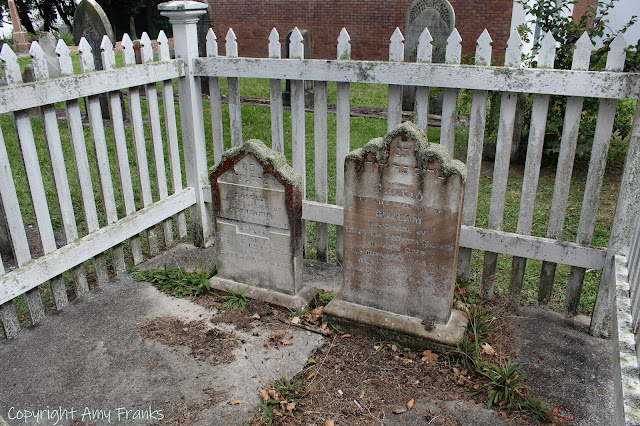
Once in a while on my cemetery visits I find graves that make me want to find out more about that persons life. These ones which had an old Victorian picket fence around them are located in the Jewish section of the Old Symonds Street Cemetery and belong to 2 little ones named Catherine Nathan and her sister Miriam Nathan, daughters of David and Rosetta.

I managed to convert the Jewish dates to 1844 and 1855 as their dates of death and although I couldn't find the cause of why they died so young I did find out that their father owned a men's fashion shop in Auckland City and was also an auctioneer so I'm guessing they probably lived in one of the many old houses that once stood nearby that has now been replaced by a more modern building. 

I can't imagine how heartbreaking it would've been to lose 2 little ones at this time with no vaccines or the medical knowledge we have today.

Linking up with Our World TuesdayThrough my lensTuesday TreasuresMy Corner of the World and Wordless Wednesday.

Tuesday, 16 June 2020

St Francis de Sales and All Saints Church


This is one place that's kinda special to me because of family connections. The St Francis de Sales and All Saints Church in Devonport, Auckland looks like one grand austere old lady.  Between 1890 and 1900 the Catholic population in town doubled and the first church on this site was a former mortuary chapel barged across the Auckland Harbour from the historical Symonds Street Cemetery to be resited here in 1893. This particular suburb was first settled by colonists in 1840 and is one of the first colonial settlements in Auckland and the first on the North Shore.


St Leo's school opened across the road in 1893 and by 1904 the church was enlarged for 200 parishioners. Father Michael Furlong who was the parish priest from 1905 to 1962 sold his own property to finance the current church, above which was built in 1919. 


My mum on the right with her twin on their confirmation day in the 1950s.

Interestingly enough my mother and her siblings were raised in Devonport and attended St Leo's school and this church as they were growing up, in fact when my grandmother passed away in 1996 her funeral was held here because they were all Catholics until the last 5 years of her life when she became a Christian.  Mum has said she remembers the nuns at school being very strict and not very kind to the children.

Linking up with Our World Tuesday and My Corner of the World.

Thursday, 16 April 2020

MOTAT Trams and Spam


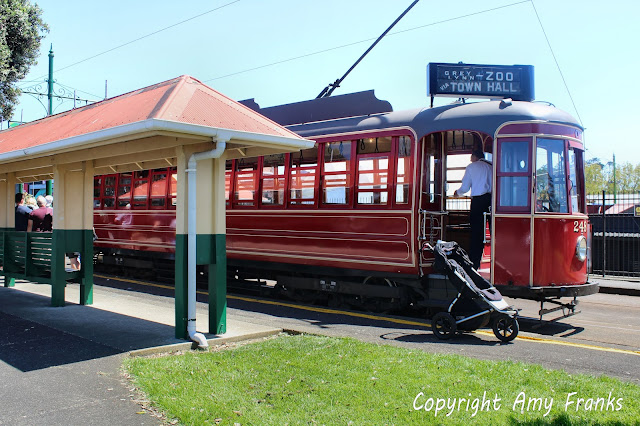
Auckland's MOTAT (Museum of transport and technology) has these lovely trams which have been rescued, renovated and re-used.  Here in NZ they first appeared in Auckland City travelling out through other suburbs through the countryside. The system in the 1930s and 1940s was about 70kms in length and the electric tramway was first privately managed by the British Electric Traction Company in London with the Auckland Borough Councils.  It was lastly taken over by the Auckland City Corporation in 1919 and continued operating until 1956.


After WW2 they were replaced by diesel and trolley buses which saw the trams fall out of favour. The Western Springs Tramway is operated by MOTAT and carries over 200,000 people a year between their 2 museums. They have 23 trams, 12 which are restored and operational which include a steam tram and a double decker from Wellington.  When the other half and I were there last year we took a ride on this one which was actually a thrilling experience and bought back memories of when I was little and my nana taking me here for rides.


The attendants and drivers on these trams are elderly men that look over 60 years old which we thought was a great idea as it would've given helped them feel useful as well as earning a wage. You can read more information about all of the trams here.


Linking up with Skywatch Friday.

Monday, 13 April 2020

Vulcan Lane - then and now


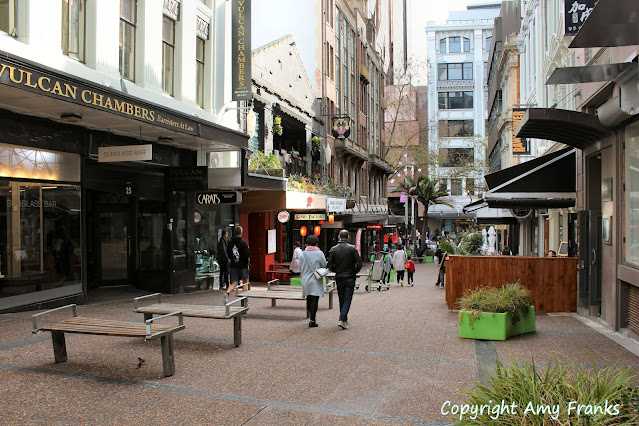
In the heart of Auckland city lies this Vulcan Lane which you can enter into from Queen Street as it snakes up to High Street and beyond. This is what it normally looks like with people wandering through looking at the speciality shops and sitting outside cafes with their coffee. We watch the news most nights and a few days ago we saw footage of how quiet and silent the city is, not one bit of the usual hustle and bustle you would expect to see. I took this photo in 2019.

Photo taken by Auckland City Council - Auckland Libraries Heritage Collections 580-16046 - 1 March 1968


Back in the 1880s this is what it use to look like and according to this blog I found it says that it was originally called "Victoria Lane" but was nicknamed "Vulcan Lane" which stuck.  Photo from Sir George Grey Special Collections.

 Auckland Libraries Heritage Collections 7-A4199, 22nd January 1968


After a fire destroyed much of the area in the 1850s then two hotels which are still open today were built namely the Queen's Ferry Hotel in the 1860s and the Occidental hotel in the 1870s. By the 1890s the land was becoming overcrowded so in 1923 it was changed to be a one way street then in 1964 it became a pedestrian walk through lane which is much better and more suited.

Can you see the car on the right? My grandad had one of those. Many of the buildings I can see in this photo are still there today.

In other news, I was saddened to read this morning that one of my favourite actors/comedians Tim Brooke Taylor had passed away. I remember him well in The Goodies, Charlie and the Chocolate Factory plus Me and my girl. Our rate of new cases as of yesterday was down to 28 which is positive but I think our lockdown should be increased to an extra 2 weeks just in case.

Linking up with Our World Tuesday and My Corner of the World.

Tuesday, 31 March 2020

The old Grafton Bridge Flats


See that building on the corner? It's known as the old Grafton Bridge Flats - 5 years ago they were up for sale and despite looking it's age some of the flats are still being lived in by tenants, probably university students or nurses who work across the road at the Auckland Hospital.

According to the Timespanner blog, the land that it sits on use to belong to the Wesleyan School that shifted to Three Kings but kept the land as an endowment asset. This makes sense as my dad's great grandparents were of the same religion and they lived in the city as well in the late 1800s.

I haven't been able to find the exact age of the buildings but from my research I've established that there have always been shops below the flats from this advertisement in the NZ Herald 1927:


And this advertisement from the Auckland Star 1927 wanting a tenant for one of the balcony flats which would've overlooked the entire city:


The only other photo I've managed to find of it is this one from when it was for sale through Bayleys Real Estate but you can see parts of Parnell, Ponsonby, Sandringham etc behind it.

Linking up with Our World Tuesday and My Corner of the World.

Saturday, 23 November 2019

Return to Alberton House


In Auckland City's Mount Albert stands this grand old lady. Alberton House was built in 1863. This entrance is from the side where the driveway is, I will show the front of it later on...altogether the house has 18 rooms.


Inside is the parlour room, this was used to welcome visitors for tea and cakes etc. Quite useful when people were calling on a member of the family.


The dining room, doesn't quite look like a huge table, probably just enough for only the members of the family. Apparently all the furniture etc in the house was used and left by the family. I just love the coloured glasses though.


The kitchen, coal range and scullery etc - again quite modest. There have been rumours over the years that apparitions have been seen in this part of the house, perhaps the servants are still keeping busy here.


Now when I was growing up my parents didn't have alot of money so mum use to take us to places that were either cheap or free, this is one place I remember visiting and from memory I think this room at that point in time was a bedroom now a sewing room.


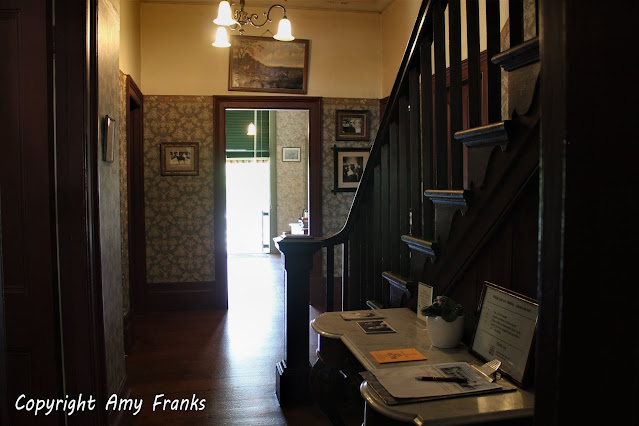
The entrance way and a set of stairs - one light and airy and one dark. I have a thing for vintage glass so I admired the colours above the front door.


The bathroom right next to the master bedroom - I like how they've kept an old bathtub in there, I imagine running water through the taps would've been a very new thing back then.


The master bedroom with it's iron bed frame. The property itself was originally owned by a man named Allan Kerr Taylor of Scottish descent born in India in 1832 one of several brothers who purchased property in early Auckland.


The library full of old books, I would be quite interested to read through and see what he was interested in.


The nursery for the little ones. Allan Kerr Taylor married for the 2nd time a suffragette named Sophia.  Together they had 10 children.


Several of the doors in the house still have the original glass within the frames - they have been well looked after.


I did read in an article online that one of his daughter's Violet was pretty much disowned by her parents after marrying a working class shipping clerk. Sophia, being an advocate for women's rights apparently didn't want any of her daughters marrying.


Another of the many bedrooms, now this is the one that interested me the most. On the first visit to this place I was only little and I vividly remember coming in here and feeling like a very eerie atmosphere but it was the sewing room I use to call it the blue room from the colour of the wallpaper.


Perhaps a study area. I liked around the house how they still had photographs of each family member here and there.


Near the front entrance. All the original wallpaper and wooden floorboards have been meticulously looked after. Apparently Mr Kerr Taylor's first wife Martha who had already lost their first child, died after giving birth to their second hence him meeting Sophia.


My mum's mother use to live just around the corner from here and two of her best friends were caretakers back in the 1970s. After Mr Kerr Taylor became involved in several business ventures that failed he suddenly died of a cerebral haemorrhage most likely caused by stressed.


His financial situation was found to be less than satisfactory. The home was mortgaged by the loan company but is now owned by Heritage NZ and is open to the public.  As for Mr Kerr Taylor, he was laid to rest in St Luke's Church Cemetery.

New blog

 Please join me at my new blog which is at amypie71.blog . I'm still making a few tweaks to it here and there, please change your link f...