Showing posts with label maori chiefs. Show all posts

Tuesday, 4 May 2021

The energy of Opepe Cemetery


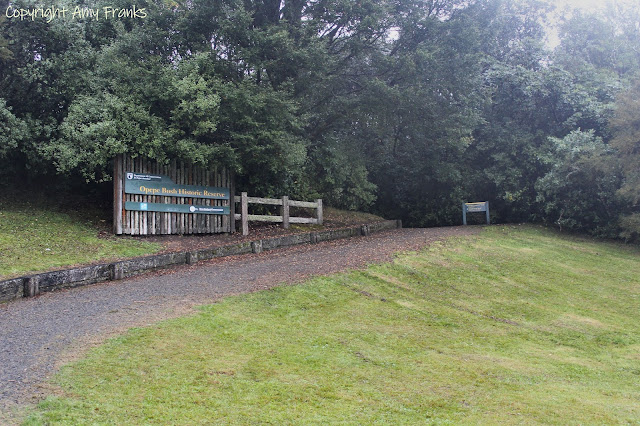
B introduced me to this place, tiny Opepe Cemetery just off the Napier Taupo highway where he said not many people knew about which is maintained by the Ministry for Culture and Heritage. 


Opepe was a settlement in New Zealand, a few miles southwest of Taupo. It was the scene of an attack between European militia and Maori on 7 June 1869 in which nine members of the militia were killed.  The Opepe Maori settlement was at the intersection of two major pre-European walking tracks (Taupo-Napier and Urewera-Tokaanu). It was the birthplace of the Maori leader Te Rangitahau


During Te Kooti's War, in early June 1869 Te Kooti and about 150 of his supporters moved towards Lake Taupo in the center of the North Island. At Opepe, just short of Taupo, they ran into party of fourteen Militia, who were camped in the abandoned village. Nine of the militia were killed with no loss to Te Kooti. One of the men, who was drying his uniform, escaped completely naked across rough country in mid-winter, and was awarded the New Zealand Medal. A military stockade was built at Opepe in 1869 but closed in 1885. The township thrived for several years in the late 19th century. 
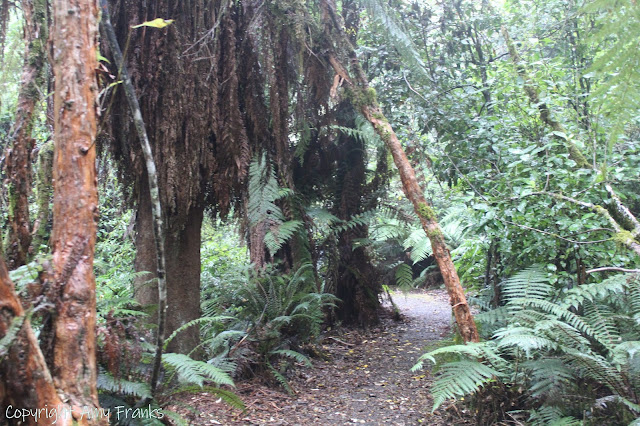


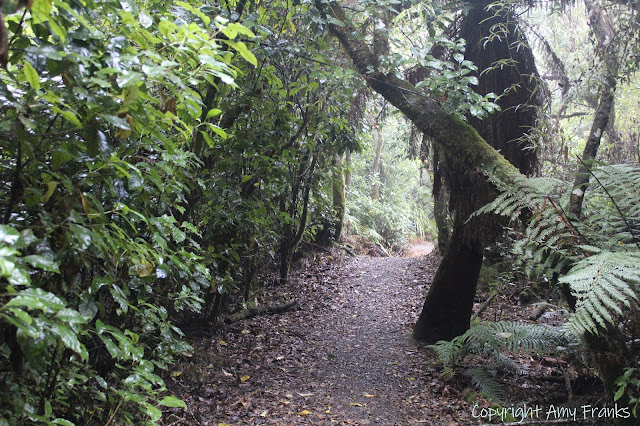
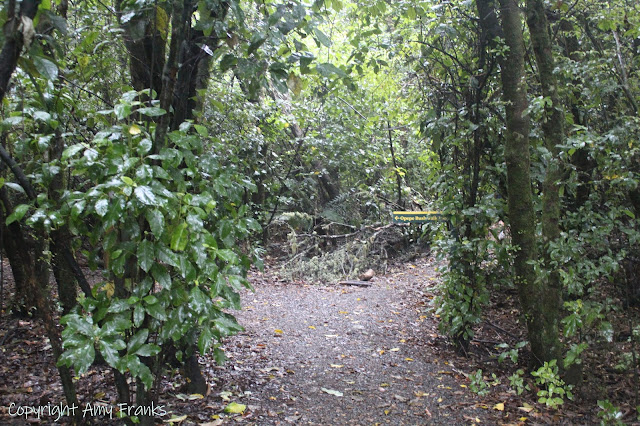
We walked through a 10 minute native bush walk before we reached the cemetery and strangely enough we could both feel the strong energy in the air.  At one point as I was rounding a corner a huge fern frond dropped to the ground next to me and nearly made me jump.
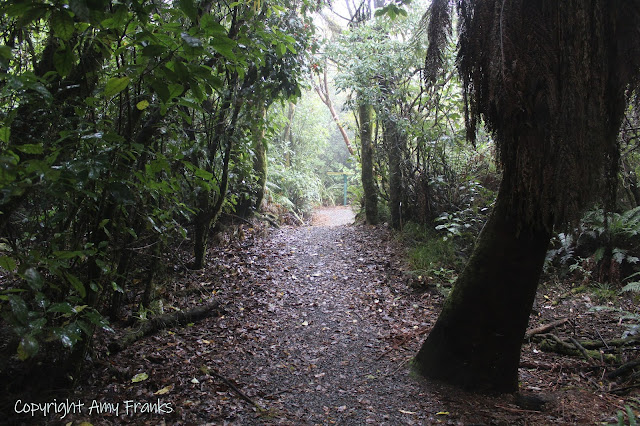


There are 2 tracks that lead off from the main entrance, one that is about 90 minutes long and the one we took. Two of the graves hold the bodies of the nine members of the Bay of Plenty Cavalry who were killed on 7 June 1869 by Te Kooti's advance guard: Alex McKillop, Charles Potier, Hector Ross, Michael Slattery, Ernest Lawson and Charles Johnson.
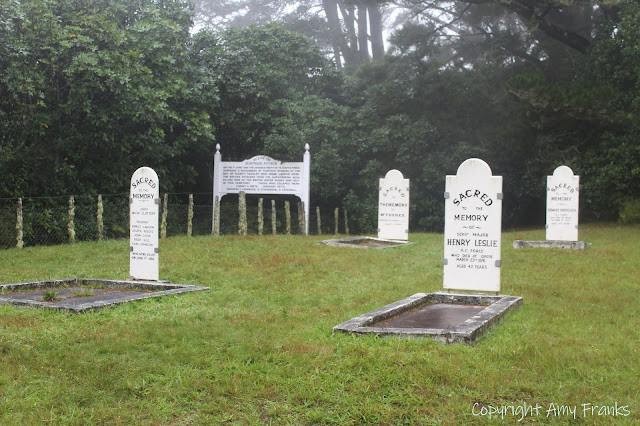


The other three are the graves of later settlers: Edward Andrehen, Henry G. Leslie and W. Turner.  The totara headboards are the original ones, which have been repainted several times over the years. However, they were showing the effects of time, and it is suspected that water ingress was causing the paint to peel and crack. This process has been completed and the headboards were re-installed in the little cemetery at Opepe by Department of Conservation staff on Christmas Eve 2010.

Monday, 15 April 2019

Visit to Ruapekapeka Pa


A couple of weeks ago B and I wanted to go exploring but didn't want to travel far so we ended up at Ruapekapeka Pa just outside of Kawakawa, about 30 minutes away from home.


This area is one of the largest most complex pa sites that was designed to counter the cannons of the British Forces in the last battle of the Flagstaff War by the Ngapuhi lead by Hone Heke.


The new British governor failed to end the war by negotiations so the Colonial forces lead by Colonel Despard assembled 1,168 men in the Bay of Islands to deal with the Maori warriors. They began a 2 week advance over 12 km to bring artillery to the Pa.


The siege continued for 2 weeks then in the morning of 11 January 1846 a William Walker Turau discovered that the pa appeared to be abandoned. A small group of British forces entered the pa and found it almost empty. The remaining Maori left tried to re-enter from the back entrance but withdrew after a 4 hour gunfight.


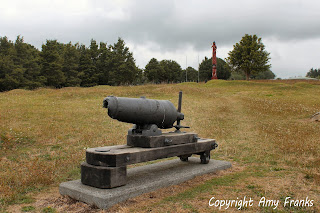
One of the entrances to a tunnel has been fenced off here so people don't fall in. The maori had a deck cannon (used for a ship) and a field gun. It was rendered useless though after it was hit 3 times and due to a limited supply of gunpowder the guns weren't able to be used much.


The pa was named Ruapekapeka (meaning bats nests) because of the tunnels and dugouts that still exist today. The caves underground could accommodate 15-20 warriors that had circular entrances at the top.


Later on after examining the Pa site it was found that it had been very well designed and strongly built. Reasons as to why the Maori had abandoned the site and then tried to re-enter it have been debated over the years. People have suggested they were at church as many of them had converted to Christianity. Knowing that the British were also Christians they had not expected an attack on a Sunday.


One of the Maori customs was that where blood was spilt that place became Tapu meaning sacred so the Ngapuhi left the Pa and carried their dead back home.

Linking up with Our World Tuesday.

Wednesday, 25 October 2017

Wiremu Neera Te Awaitaia


I'm one of those people who have a fascination with old things, houses....cemeteries. I don't see them as morbid or useless...I see them as places full of history and memories.  On our recent trip through Raglan it was a blustery freezing cold Spring day, New Zealand had seen alot of rain that almost seem to keep going and going so this area was flooded in places. This small cemetery and monuments are in honour of Wiremu Neera Te Awataia, who was a Maori chief when the first ever contact was being made with European settlers.


He was born in 1796 into the Waikato Tribe of Ngati Mahanga and was known as a friend of the Pakeha (white people) and a person of great influence in Raglan. His name in the English language means "William Naylor".

Sooo do you ever visit historical areas and what are your favourite places?

btw I'm home from work for the rest of the week, seems the flu has developed into a chest infection leading to Laryngitis. Anti-biotics are now being taken and boredom has set in. Can't wait to get back to real life.

New blog

 Please join me at my new blog which is at amypie71.blog . I'm still making a few tweaks to it here and there, please change your link f...